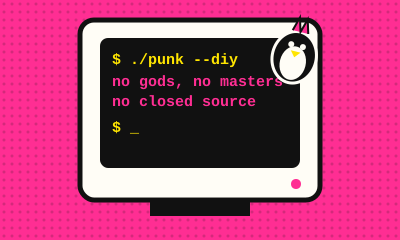
Punk and free software: the DIY ethics of GNU and the GPL
Punk and free software grew up in different rooms, but they keep ending up at the same parties. One is a music and attitude that says you don’t need permission to make something; the other is a set of licences and tools that says you don’t need permission to use, study, change and share software. If you’ve ever burned a compilation tape, photocopied a zine, or set up a band page on a second-hand PC, you’ve already been living in the overlap.
DIY is a method, not a mood
DIY in punk was never just a slogan. It was distribution: labels run out of bedrooms, zines stapled by hand, gigs in basements, tapes traded through the post. The point was to shorten the distance between making a thing and getting it to people who cared, without asking a gatekeeper to approve it first.
Free software is the same move applied to code. The GNU Project started in 1983 with the aim of building a complete operating system that users could run, copy, modify and redistribute freely. Richard Stallman’s framing was explicitly about freedom rather than price: the four freedoms to run, study, change and share. That’s a DIY ethic with a legal appendix.
Where punk had photocopiers and four-track recorders, free software had compilers and mailing lists. Both scenes were full of people who learned by doing, asked questions in public, and treated the tools as something you pass around rather than guard.
Copyright and copyleft: the same law, different direction
Copyright is the default. You make something, you (or your label, or your employer) hold the rights, and other people need permission to copy or adapt it. Punk never escaped copyright; it just found ways to work with it, around it, or in spite of it. Zines quoted lyrics, tapes circulated, and plenty of it was technically infringement. The ethic was sharing; the law was not always on side.
Copyleft is a cleverer move. It uses copyright to guarantee the freedoms instead of restricting them. The GNU General Public License says you can use, study, modify and redistribute the software, but if you distribute a modified version, you have to pass on the same freedoms. The licence is sometimes described as “viral”, which is a bit of a lazy metaphor but captures the intent: the freedoms travel with the code.
The punk analogue is a scene rule rather than a legal one. If you tape a record, you’re expected to tape it for someone else. If you start a band, you help other bands set up. The GPL is that instinct written down by lawyers who understood what the scene was trying to protect.
It’s worth being precise: copyleft is not anti-copyright. It’s a use of copyright. That distinction matters, because it means free software can sit alongside commercial use, paid support, and bands selling records while still sharing their work.
Why early punk websites ran on Linux
By the late 1990s, punk and hardcore scenes were online, but not on the polished platforms we have now. Band pages, label catalogues and zine archives were often hand-coded HTML on a server someone knew about. Linux and the GNU userland were a natural fit for a few practical reasons:
- Cost. A second-hand PC and a free operating system cost nothing but time. For a scene built on not having money, that mattered.
- Control. You could run your own web server, mail server and mailing list without asking a hosting company for permission or paying for features.
- Tinkering. The people running these sites were often the same people who’d take apart a guitar amp or a bike. A free operating system that came with source code and a community of help was familiar territory.
- The licence matched the ethic. Distributing a Linux-based server, or a copy of the software to a friend, didn’t feel like piracy. It felt like the point.
This wasn’t universal, and plenty of early punk sites ran on whatever shared hosting was cheap that month. But the DIY web of that era, with its guestbooks, hand-made graphics and link pages, shared a lot of DNA with the free software world: small tools, public help, and a suspicion of anyone who wanted to lock things down.
The same argument, different decades
Both scenes have spent decades arguing about selling out, about who gets to call themselves part of the scene, and about whether sharing is a political act or just convenient. Punk has had its major-label debates; free software has had its open-source-versus-free-software debates, including the split that produced the Open Source Initiative in 1998. In both cases, the disagreement is often less about the tools than about what the tools are for.
The useful thing about the GPL and the broader free software movement is that they give the DIY instinct a durable form. A zine can go out of print; a tape can degrade. A licence and a codebase can keep circulating, and people can pick them up years later and keep building. That’s not romantic, it’s practical, and practical is what punk was always good at.
If you want to dig into the history, the GNU Project’s own pages are the primary source, and the Free Software Foundation publishes the licences and the arguments behind them. For the punk side, the zine archives and label catalogues are still the best record, often scanned and shared by the same kind of people who kept the servers running.
The overlap isn’t a coincidence. It’s two groups of people who decided that the best way to keep a culture alive is to let other people copy it.
FAQ
What does copyleft mean?
Copyleft uses copyright to guarantee freedoms instead of restricting them. The GNU General Public License lets you use, study, modify and redistribute software, but requires that modified versions you distribute pass on the same freedoms.
When did the GNU Project start?
The GNU Project started in 1983 with the aim of building a complete operating system that users could run, copy, modify and redistribute freely.
Why did early punk websites use Linux?
Linux and the GNU userland were free, gave users full control over their own servers and mailing lists, and appealed to people already used to tinkering with tools and sharing source code.
Is copyleft anti-copyright?
No. Copyleft is a use of copyright, not a rejection of it. It relies on copyright law to ensure that the freedoms travel with the software.